
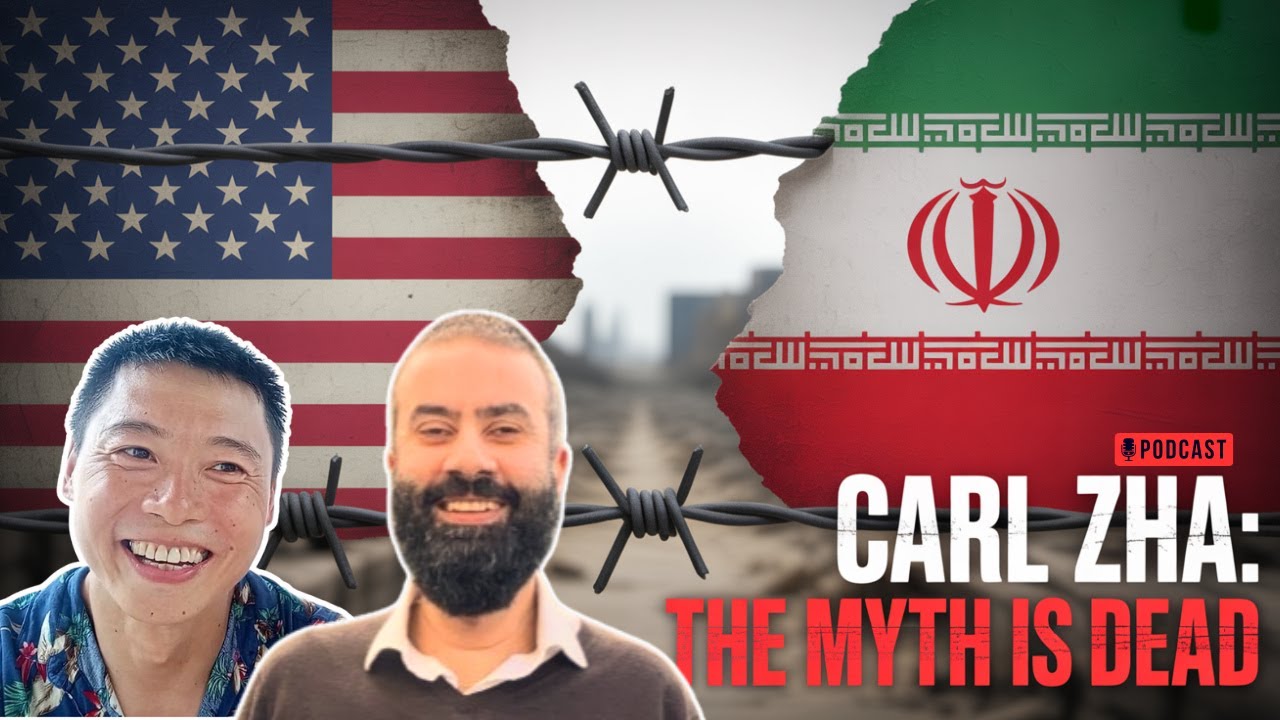
Buried Bunkers, Broken Myths: Why Israel and USA Combined Can’t Defeat Iran — Carl Zha Returns
Can Israel and the United States actually finish what they started against Iran? Or are we watching the real limits of American military power exposed in real time?
In this episode of the Kianistan Podcast, host Tafhim Kiani welcomes back Carl Zha, geopolitical analyst and host of the Silk and Steel podcast, for an urgent follow-up conversation just days after Israel’s attack on Iran began.
Zha lays out why Israel’s missile defenses are being overwhelmed, why the United States lacks the industrial capacity to sustain a prolonged war, and why a full ground invasion of Iran is simply not realistic given current American military capabilities.
The conversation covers the economics of missile warfare, China’s rare earth leverage over US weapons production, and how Iran, Russia, and China are quietly reshaping the balance of power in the region.
Key Topics Discussed
Why Israel Attacked — and Why Netanyahu Needed This War
Zha begins by tracing the political and strategic motivations behind the timing of Israel’s attack.
The discussion explores:
- Netanyahu’s ongoing corruption trial and his political need to remain a wartime leader
- A long-standing US-Israel plan targeting Iran going back over a decade
- How nuclear negotiations were reportedly used as cover while Iran’s guard was down
Iran’s Missile Campaign and Israel’s Defense Crisis
The conversation turns to the simple math undermining Israel’s missile defense strategy.
- How Iran mixed older and newer missiles to overwhelm the Iron Dome
- The stark cost imbalance between roughly $200,000 Iranian missiles and $12 million interceptors
- Reports suggesting Israel could run out of interceptor missiles within about two weeks
The Limits of American Industrial Capacity
Zha argues the real constraint on US power right now isn’t money, but production capacity.
- Why the US can print money but cannot print missiles
- Decades of manufacturing offshoring now catching up with the military-industrial complex
- China’s rare earth export restrictions and their impact on US weapons production, including the F-35
Why a Ground Invasion of Iran Isn’t Realistic
The discussion lays out why comparisons to the Iraq War don’t hold up.
- The scale difference between Iraq’s and Iran’s population and mountainous terrain
- The loss of US Army troop transport capacity since the Iraq War
- Why a symbolic bombing run, rather than a ground campaign, is the more likely American scenario
How Iran Would Likely Respond
Zha outlines Iran’s calibrated strategy for managing the conflict without triggering full US entry.
- Iran’s approach of causing pain without pushing Israel to the brink of collapse
- Why US bases in Iraq and Syria are the most exposed potential targets
- What a full-scale US assault would mean for the wider Gulf region
China and Russia’s Quiet but Consequential Support
The episode closes on the less visible but significant backing Iran receives from its partners.
- China’s continued purchase of the large majority of Iran’s oil exports
- Reports of Chinese missile-making materials reaching Iran before the war began
- Why China believes in “winning without battle” through economic leverage rather than direct confrontation
Major Takeaways
- Israel’s missile interceptor stockpile is being depleted faster than it can be replenished.
- Decades of US manufacturing offshoring have created a real industrial capacity constraint on sustained warfare.
- A full ground invasion of Iran is not realistic given current US troop transport and logistics capacity.
- Iran is pursuing a calibrated response strategy designed to inflict cost without triggering direct US entry.
- China’s rare earth export restrictions are directly affecting US weapons production, including the F-35.
- China and Russia continue to back Iran’s sovereignty through trade and materials rather than direct military support.
About Carl Zha
Carl Zha is a geopolitical analyst and podcast host, born in China in 1976 and raised between China and the United States before settling in Bali, Indonesia. He hosts the Silk and Steel podcast on Patreon and runs a YouTube channel under his own name covering geopolitics and China-focused commentary.
His work focuses on:
- US-China Relations
- Middle East Geopolitics
- Military and Industrial Capacity Analysis
- Multipolarity
About Kianistan Podcast
Hosted by Tafhim Kiani, the Kianistan Podcast features conversations with leading academics, analysts, and commentators on the conflicts reshaping the Middle East and the wider world. This episode is a fast-turnaround follow-up recorded just days into the Israel-Iran war, bringing Carl Zha back for real-time analysis.
Topics regularly include:
- Iran
- Israel
- United States
- China
- Middle East
- Military Strategy
- International Relations
Frequently Asked Questions
Can the US and Israel realistically defeat Iran militarily?
According to Carl Zha, a full ground invasion is not realistic given current US troop transport capacity and Iran’s size and terrain, making a limited bombing campaign the more likely scenario rather than outright military defeat.
Why is Israel running low on interceptor missiles?
Israel’s Iron Dome and associated systems are being overwhelmed by a mix of older and newer Iranian missiles, with each interceptor costing roughly $12 million against Iranian missiles costing a fraction of that, straining stockpiles that reports suggest could run out within about two weeks.
How is China supporting Iran during this conflict?
China continues purchasing the large majority of Iran’s oil exports and has reportedly supplied missile-making materials, while also restricting rare earth exports needed for US weapons systems like the F-35.
Why did Netanyahu launch this war now?
Carl Zha argues Netanyahu’s ongoing corruption trial gives him a personal incentive to remain a wartime leader, alongside a longer-standing US-Israel strategic plan targeting Iran.
Conclusion
This urgent follow-up conversation with Carl Zha argues that the Israel-Iran war is exposing real limits in American military and industrial power — limits that money alone cannot solve.
From missile economics to rare earth supply chains to the sheer scale of Iran itself, this episode makes the case that neither a swift victory nor a full ground invasion is realistically on the table.
Whether you’re following the Israel-Iran war closely or want to understand the deeper structural forces at play, this episode is essential listening.
SEO Keywords
- Carl Zha
- Israel Iran War
- Iron Dome
- Iran Missile Program
- US Military Capacity
- China Rare Earth
- Israel Interceptor Missiles
- Middle East Conflict