
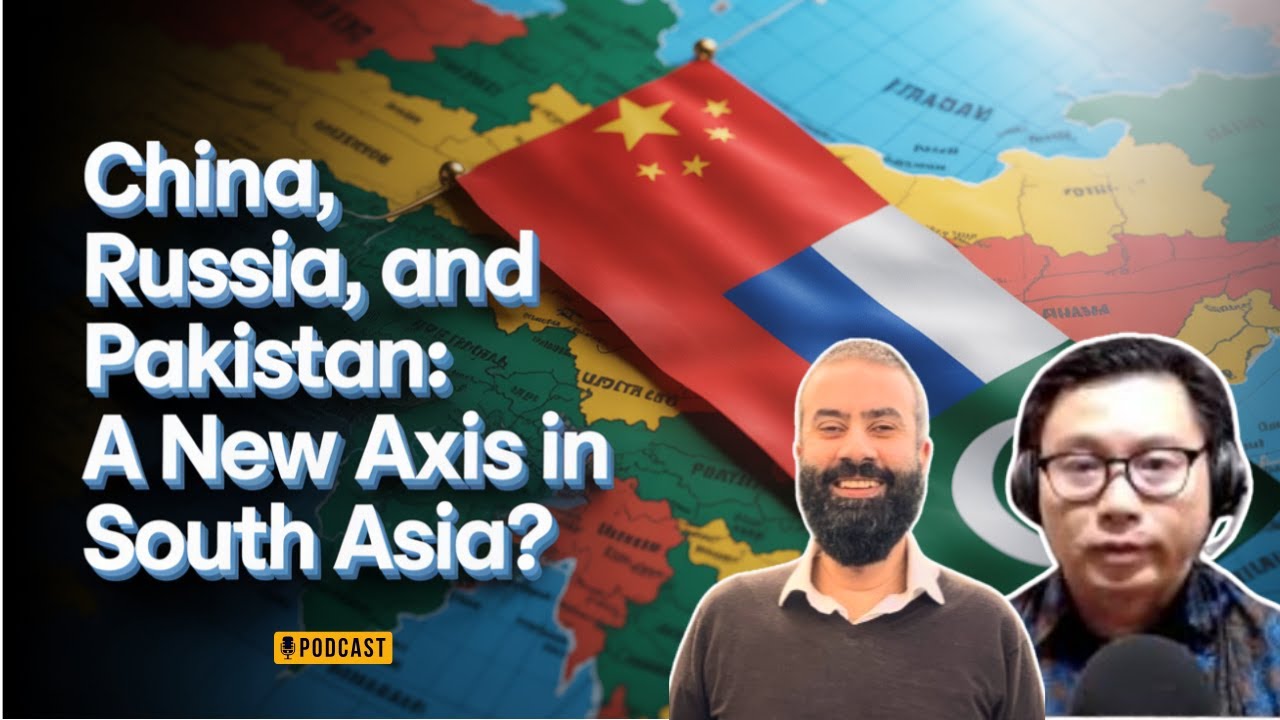
India vs Pakistan: The Air Battle That Shook Asia — Carl Zha Explains China’s Role in South Asia’s New Order
Why did China break from decades of cautious neutrality to openly back Pakistan in its May 2025 conflict with India? And what does the humiliation of the Indian Air Force reveal about the shifting balance of power across Asia?
In this episode of the Kianistan Podcast, host Tafhim Kiani sits down with Carl Zha, geopolitical analyst and host of the Silk and Steel podcast, to examine the India-Pakistan air war of May 2025 and what it reveals about the region’s shifting alliances.
Drawing on a life split between China, the United States, and now Indonesia, Zha explains how his own break from mainstream Western media reporting shaped a worldview that now informs his analysis of Asian geopolitics.
The conversation covers India’s balancing act between the Quad and BRICS, the CPEC corridor, Russia’s Eurasian ambitions, and why he believes Iran will eventually pursue nuclear weapons.
Key Topics Discussed
From New York Times Liberal to China’s Leading Western Voice
Carl Zha traces how his views shifted dramatically from the American liberal worldview he grew up absorbing.
The discussion explores:
- Growing up in China after Mao’s death and moving to the US in 1990
- How the Iraq War’s WMD lies broke his trust in mainstream reporting
- Following the Syrian war on Twitter and seeing firsthand how Western media narrates conflicts
- Why he began speaking publicly about China during Trump’s first term
How the May 2025 India-Pakistan Conflict Unfolded
Zha walks through the sequence of events that led from a terrorist attack to a full-scale military confrontation.
Topics include:
- India’s balancing act between the Quad and BRICS
- The Pahalgam attack and India’s immediate blame on Pakistan without evidence
- Why India avoided targeting Pakistani military installations on the first day
- How Pakistan’s air force, on high alert for weeks, was ready when India struck
Why the Indian Air Force Was Humiliated
The conversation examines the gap between official Indian narratives and what independent sources confirmed.
- Confirmation from Reuters, CNN, and Western intelligence of downed Rafale jets
- The gap between what Indian state media claimed and what actually happened
- How India shifted to drones and missiles after its initial air losses
- The role of Pakistan’s AWACS aircraft and data-linked J-10C fighters
China, Pakistan, and the CPEC Corridor
Zha explains why the China-Pakistan relationship runs far deeper than arms sales.
- The joint development and hands-on training behind Pakistan’s JF-17 program
- Why China’s investment in Gwadar Port matters strategically
- How India’s threats to CPEC during the conflict shaped China’s response
- China’s “iron brothers” relationship with Pakistan compared to its posture on Russia
Russia’s Pivot Toward Pakistan and Central Asia
The discussion turns to a notable shift in Russia’s regional posture.
- Russia’s interest in warm-water port access through Gwadar
- Why Russia stayed notably quiet in support of India this time
- How India’s deepening alignment with the US has strained the Russia relationship
- China inviting Afghanistan into the CPEC and Belt and Road framework
Iran, the Nuclear Question, and the Path Ahead
Zha connects the South Asian conflict to the broader regional picture involving Iran.
- Why China has invested heavily in Iran’s energy sector
- The competition between India’s Chabahar port and China’s Gwadar
- Why Zha believes sanctions pressure will eventually push Iran toward nuclear weapons
- Comparing Iran’s position to the outcomes in Iraq, Libya, and North Korea
China’s “Win-Win” Model vs America’s Zero-Sum Politics
The episode closes on a broader comparison of how the two powers approach the developing world.
- Why China’s approach to global development differs fundamentally from Washington’s
- Critiquing analysts like John Mearsheimer for projecting American assumptions onto China
- Why the Global South finds China’s growth-focused model more appealing
Major Takeaways
- The Indian Air Force suffered a significant, internationally verified setback in the May 2025 conflict.
- China’s backing of Pakistan, including joint training and technology transfer, played a decisive role in the outcome.
- Russia’s relative silence reflected growing strain with India over its alignment with Washington.
- CPEC and Gwadar Port are becoming central to a broader China-Russia-Pakistan-Iran alignment.
- Zha argues Iran will eventually pursue nuclear weapons, following the pattern set by Iraq, Libya, and North Korea.
- China’s development-focused foreign policy contrasts sharply with what Zha calls America’s zero-sum approach.
About Carl Zha
Carl Zha is a geopolitical analyst and podcast host, born in China in 1976 and raised between China and the United States before settling in Bali, Indonesia. He hosts the Silk and Steel podcast on Patreon, where he chronicles Chinese history from antiquity, and runs a YouTube channel under his own name covering geopolitics and China-focused commentary.
His work focuses on:
- Chinese History and Politics
- US-China Relations
- South Asian Geopolitics
- Belt and Road Initiative
- Multipolarity
About Kianistan Podcast
Hosted by Tafhim Kiani, the Kianistan Podcast features conversations with leading academics, analysts, and commentators on the power shifts reshaping South Asia and the wider world. This episode brings a rare cross-cultural perspective on China’s growing role in the India-Pakistan rivalry.
Topics regularly include:
- China
- Pakistan
- India
- Iran
- Russia
- BRICS
- CPEC
- International Relations
Frequently Asked Questions
Who is Carl Zha?
Carl Zha is a geopolitical analyst and podcast host, born in China and raised between China and the United States, who now hosts the Silk and Steel podcast and a YouTube channel covering Chinese history and geopolitics.
What happened in the India-Pakistan conflict of May 2025?
Following the Pahalgam attack, India struck sites inside Pakistan, leading to an air battle in which Pakistan’s air force, backed by Chinese technology and training, shot down multiple Indian aircraft including Rafale jets.
Why did China support Pakistan so openly during the conflict?
China has deep strategic and economic interests in Pakistan through the China-Pakistan Economic Corridor and considers a weakened Pakistan contrary to its own regional interests, prompting an unusually vocal show of support.
What is CPEC?
CPEC, the China-Pakistan Economic Corridor, is a flagship Belt and Road Initiative project connecting China’s Xinjiang province to Pakistan’s Gwadar Port, giving China an alternative energy and trade route to the Persian Gulf.
Conclusion
The May 2025 India-Pakistan air war did more than settle a military score — it exposed how deeply China’s technology, training, and strategic backing now shape outcomes in South Asia, and how far Russia has drifted from its old alignment with India.
Carl Zha’s perspective, shaped by a life lived across three continents, offers a rare vantage point on how these shifting alliances connect to the broader contest between a Western zero-sum model and China’s development-first approach.
Whether you’re interested in South Asian security, China’s foreign policy, or the future of the multipolar order, this episode is essential listening.
SEO Keywords
- Carl Zha
- India Pakistan Conflict
- CPEC
- Gwadar Port
- China Pakistan Relations
- Belt and Road Initiative
- Indian Air Force
- Rafale
- South Asia Geopolitics