
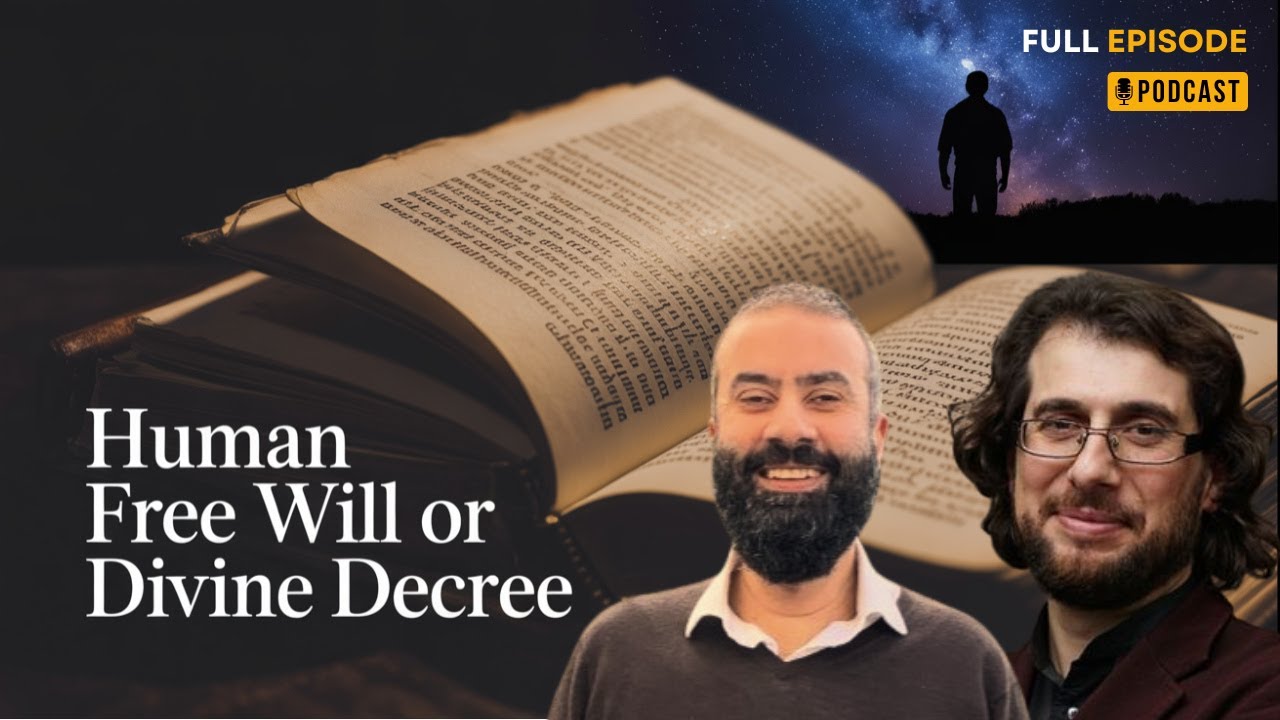
7 Insights into Islamic Metaphysics and Divine Causality with Dr. Ozgur Koca
Islamic Metaphysics serves as the profound bridge where human reason meets divine revelation. In this episode of the podcast, Dr. Ozgur Koca, a professor of Islamic studies and philosophy, explores how historical debates surrounding Islamic Metaphysics and causality continue to shape our understanding of science, miracles, and free will today.
1. Why Islamic Metaphysics and Causality Matter Today
The study of Islamic Metaphysics is not merely an academic exercise; it is the foundation of how we perceive our place in the cosmos. Dr. Koca explains that the question of causality—how things happen and who causes them—is the “other side of the coin” to human freedom. To be truly free is to be an “uncaused cause,” a concept that challenges our modern understanding of biological and genetic determinism.
2. The Mu’tazilite School: Divine Justice and Agency
The Mu’tazilites, known as the “People of Justice,” emphasized that for God to be truly just, human beings must possess real agency (qudra). Within the framework of Islamic Metaphysics, they argued:
-
Humans are the creators of their own acts to ensure accountability for reward or punishment.
-
The world must be an intelligible and consistent place where specific causes lead to predictable effects.
-
Consistency in nature is essential for the very existence of justice and moral responsibility.
3. The Ash’arite Perspective: Divine Will and Habit
In contrast, the Ash’arite school focused on divine transcendence and absolute freedom. They proposed that:
-
God creates both the cause and the effect at every single moment.
-
What we perceive as “natural laws” are actually the “habits of God” (‘ada), which He follows predictably but is not bound by.
-
This view allows for miracles to be seen as the “negation of causality,” where God simply chooses to act outside of His usual habit.
4. The Participatory Account of Islamic Metaphysics
Dr. Koca introduces a third way: the Islamic Participatory Account of Causality. Drawing from the Sufi metaphysics of Ibn ‘Arabi and the philosophy of Mulla Sadra, this view centers on Wujud (Being).
-
God is not just a “first cause” at the end of a chain, but Being itself.
-
Human freedom is a result of us participating in the divine quality of Will.
-
This non-dualistic framework removes the distance between the Creator and the cosmos.
5. Miracles: An Invitation to Science
A revolutionary takeaway from Dr. Koca’s work is the idea that miracles are “invitations to science” rather than “science stoppers”. If we view miracles as involving both divine will and subtle causal processes, they become cues for human discovery. For instance, modern technology like Zoom would have seemed like a miracle centuries ago, yet it operates through causal processes we have since mastered.
6. Bridging the Gap: Tasarruf and Taslim
Islamic Metaphysics provides a practical toolkit for living:
-
Tasarruf (Agency): When looking at the future, we act as free agents, striving to change the world for the better.
-
Taslim (Submission): When looking at the past, we seek the “comfort of submission,” accepting what has occurred as the divine decree. These two concepts are the “two wings of a bird” that allow for spiritual take-off.
7. Porous Boundaries in High-Level Thought
At the highest levels of Islamic Metaphysics, the rigid boundaries between sects and even different religions become porous. Great thinkers like Thomas Aquinas benefited significantly from Muslim philosophers like Avicenna and Al-Ghazali. This level of discourse fosters a “real dialogue” where the focus shifts from tribalism to the universal pursuit of truth.
Further Reading and Resources:
-
For more on the intersection of faith and reason, visit the Stanford Encyclopedia of Philosophy for a deep dive into Arabic and Islamic Metaphysics.
-
Explore Dr. Koca’s detailed findings in his latest book, Islam, Causality, and Freedom.
-
Learn more about the Bayan Islamic Graduate School where Dr. Koca teaches these transformative concepts.
Internal Link: Discover more episodes on Islamic History and Philosophy to expand your understanding of the tradition.