
Understanding Dreams in Islam: Signs, Symbols, and Meanings
Understanding Dreams in Islam: Signs, Symbols, and Meanings
Introduction
Dreams have held a powerful place in Islamic thought and spirituality since the earliest days of Islam. From the dreams of Prophet Yusuf (AS) mentioned in the Qur’an to the regular practice of dream interpretation by Prophet Muhammad ﷺ, dreams are seen not merely as subconscious images but as meaningful experiences that can carry guidance, warnings, or reflections of the soul.
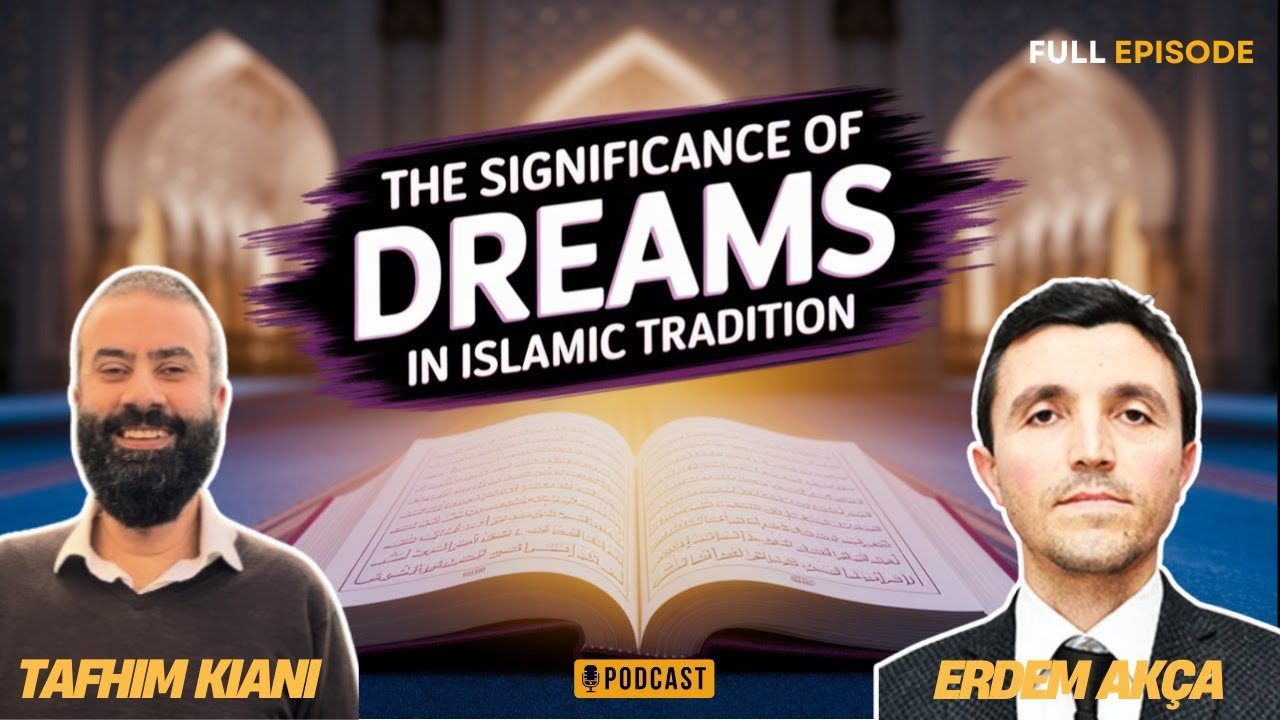
In this episode of **Kianistan**, we explore the deep and often misunderstood subject of dreams in Islam with **Erdem Akca**, an Islamic dream interpreter trained in theology and Islamic history. This discussion sheds light on the spiritual, psychological, and symbolic dimensions of dreams from an Islamic perspective.
—
The Islamic Foundation of Dream Interpretation
Dream interpretation in Islam is firmly rooted in the Qur’an and Sunnah. One of the most detailed discussions of dreams appears in **Surah Yusuf**, where multiple dreams are narrated and interpreted, including those of Prophet Yusuf (AS), the King of Egypt, and fellow prisoners. This diversity highlights that dreams are a universal human experience, relevant to all levels of society.
Prophet Muhammad ﷺ also placed great importance on dreams. He would regularly ask his companions after Fajr prayer whether anyone had seen a dream and would interpret them if they shared. This established dream interpretation as a recognized and respected discipline within Islam.
—
Types of Dreams in Islam
Islamic tradition classifies dreams into three main categories:
1. Rahmani (True) Dreams
These dreams come from Allah and often carry clarity, peace, and a coherent message. They leave a lasting emotional impact and may offer guidance or insight. Such dreams may be shared with trustworthy and knowledgeable people.
2. Nafsani (Psychological) Dreams
These dreams arise from a person’s own thoughts, emotions, or daily experiences. They usually lack deeper spiritual meaning and do not require interpretation.
3. Shaytani (Disturbing) Dreams
These dreams cause fear, anxiety, or distress and come from Shaytan. The Prophet ﷺ advised believers not to share such dreams and to seek refuge in Allah from their harm.
—Universal and Personal Symbols in Dreams
According to Erdem Akca, many dream symbols are **universal**, meaning their interpretation remains consistent across cultures. However, some symbols are **personal** and require knowledge of the dreamer’s life, emotional state, and circumstances.
Cultural background can sometimes add nuance, but it rarely obstructs interpretation. This is why Islamic dream interpretation can be applied globally, as its symbolic language transcends geography.
—
Common Dreams and Their Meanings
Teeth Falling Out
Often interpreted as:
* A sign related to family or close relatives (classical view)
* A symbol of mental stress, inability to process information, or intellectual imbalance (contemporary understanding)
Hair Falling Out
Hair can symbolize:
* Wealth or possessions
* Thoughts and mental clarity
Complete hair loss may point to financial loss or difficulty in thinking clearly.
Being Chased
This dream is commonly linked to:
* Internal conflicts
* Confusion caused by incomplete or harmful information
When a person gains clarity and strong understanding, these dreams often stop.
Falling from Heights
Falling dreams may indicate:
* Following ego-driven desires (nafs)
* Careless speech or moral decline
Islamic tradition symbolically connects falling with spiritual loss when one moves away from truth.
Being Naked in Public
This dream often reflects:
* Spiritual vulnerability
* Difficulty practicing faith openly in society
The Qur’anic concept of *libās al-taqwā* (the garment of righteousness) is central to this interpretation.
—
Seeing the Deceased in Dreams
The meaning of seeing deceased relatives depends heavily on timing:
* **Within two years of death:** The dream may directly relate to their condition in the hereafter.
* **After two years:** The deceased often appear as symbols, such as parents representing protection, authority, or guidance.
—
Dreams, Time, and Spiritual State
Contrary to popular belief, Islamic teachings do not restrict meaningful dreams to specific hours of the night. While early morning dreams may feel clearer, true dreams can occur at any time, depending on a person’s spiritual awareness and inner state.
—
Istikhara: Seeking Guidance Through Dreams
Istikhara is a Sunnah practice taught by Prophet Muhammad ﷺ for seeking Allah’s guidance in important decisions.
How Istikhara Is Performed:
* Pray two units (rak‘ah) of prayer
* Recite the Istikhara supplication
* Ask whether a matter is **good or harmful**, not for unseen knowledge
Guidance may come through dreams or through a natural inclination of the heart toward one option. Istikhara can be repeated for several days if clarity does not emerge immediately.
—
Islamic Dream Interpretation vs. Freud
Erdem Akca highlights a key difference between Islamic and Freudian approaches. Freud interpreted most dreams through a sexual lens, whereas Islam views dreams as **multi-dimensional**, involving spirituality, intellect, emotions, morality, and future possibilities.
In Islam, even dreams containing physical imagery are often symbolic rather than literal. This broader framework allows for deeper and more balanced interpretations.
—
Why Dreams Still Matter Today
In an age of anxiety, confusion, and information overload, dreams continue to act as mirrors of the soul. Islamic dream interpretation provides tools to understand these inner messages without superstition or exaggeration.
As discussed on **Kianistan**, dreams are not about predicting the future but about understanding oneself, strengthening faith, and aligning with truth.
—
Final Thoughts
Dreams in Islam are a bridge between the seen and unseen, the conscious and subconscious, the material and the spiritual. With proper knowledge and balance, they can offer insight, comfort, and direction.
This episode of **Kianistan** with Erdem Akca invites listeners to rediscover an ancient Islamic science that remains deeply relevant in the modern world.
—
**Keywords (SEO):** Islamic dream interpretation, dreams in Islam, dream meanings Islam, Islamic psychology, Rahmani dreams, Istikhara dreams, Islamic spirituality, Kianistan podcast