
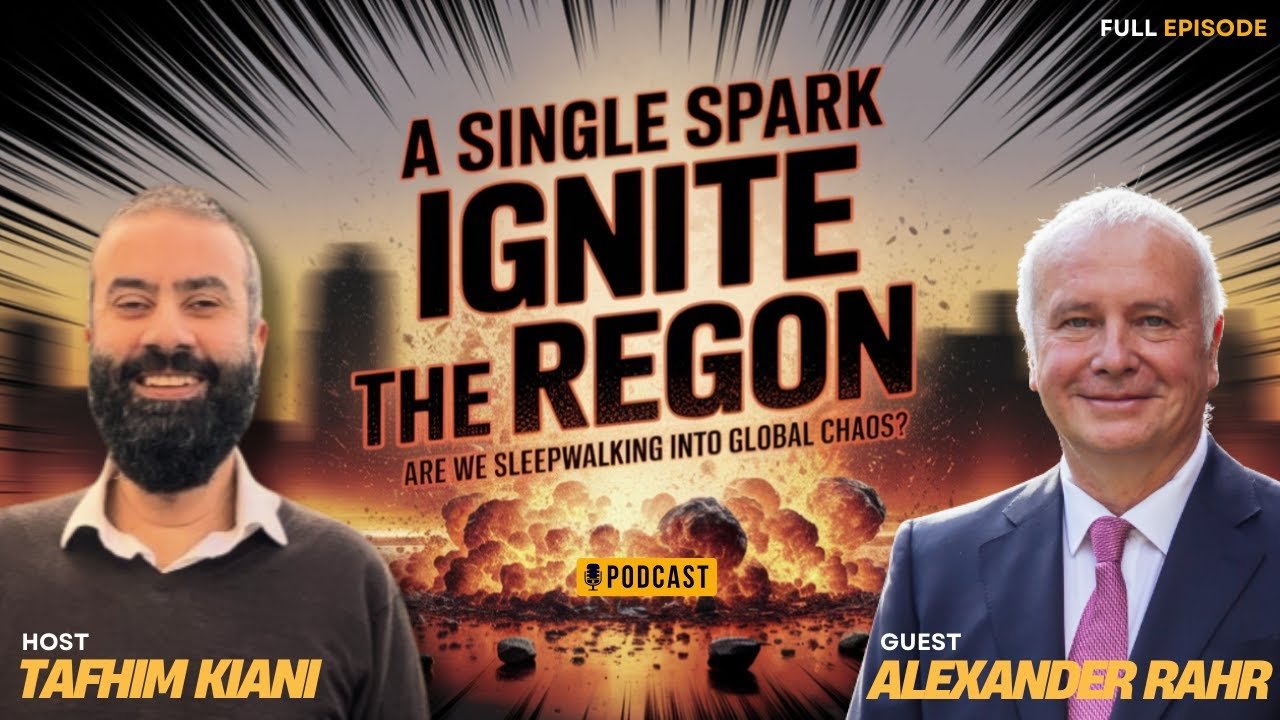
The Ticking Time Bombs of Global Geopolitics
India, Pakistan, Iran & Syria with Alexander Rahr
As global power rivalries intensify, several regions stand out as geopolitical flashpoints capable of triggering wider international conflict. In this episode, geopolitical analyst Alexander Rahr joins the discussion to unpack the growing instability across India, Pakistan, Iran, and Syria—four regions where unresolved tensions, military escalation, and great-power competition intersect dangerously
[English (auto-generated)] Epis…
.
This episode provides a sharp, unfiltered analysis of global security risks, regional power struggles, and the failure of Western diplomacy in containing emerging crises.
Who Is Alexander Rahr?
Alexander Rahr is a prominent German political analyst, historian, and expert on Russia–Europe relations. With decades of experience advising governments and think tanks, Rahr is known for his realist approach to geopolitics and his willingness to challenge dominant Western narratives.
His expertise spans:
-
Eurasian geopolitics
-
Russia–NATO relations
-
Middle Eastern power dynamics
-
Multipolar global order
In this episode, Rahr applies this lens to some of the world’s most volatile regions
[English (auto-generated)] Epis…
.
Why These Regions Are “Ticking Time Bombs”
According to Rahr, the danger in today’s geopolitics is not a single global war—but multiple regional conflicts that can easily merge into one.
Key risk factors include:
-
Nuclear-armed rivals
-
Weak diplomatic channels
-
Proxy warfare
-
External interference by great powers
India–Pakistan, Iran–Israel tensions, and Syria’s unresolved war all represent pressure points in the global system
[English (auto-generated)] Epis…
.
India and Pakistan: Nuclear Rivals on a Hair Trigger
The Kashmir Problem
The long-standing dispute over Kashmir remains one of the world’s most dangerous conflicts. Both India and Pakistan possess nuclear weapons, yet regular border clashes and political escalations continue.
Rahr emphasizes that:
-
Nationalist politics on both sides fuel escalation
-
External mediation has largely disappeared
-
The risk of miscalculation is extremely high
Unlike Cold War nuclear rivals, India and Pakistan lack robust crisis-management mechanisms, making even small incidents potentially catastrophic
[English (auto-generated)] Epis…
.
Iran: Sanctions, Isolation, and Strategic Pressure
Iran occupies a central role in Middle Eastern geopolitics and faces constant pressure from:
-
US and EU sanctions
-
Israeli security concerns
-
Regional rivalries with Gulf states
Rahr argues that Western isolation of Iran has failed, pushing Tehran closer to Russia and China instead of moderating its behavior.
Key Iranian Concerns
-
Regime survival
-
Deterrence against Israel and the US
-
Influence in Iraq, Lebanon, and Syria
The absence of sustained diplomacy increases the risk of a wider regional war involving multiple actors
[English (auto-generated)] Epis…
.
Syria: A War That Never Really Ended
Although the Syrian war has faded from Western headlines, Rahr stresses that Syria remains an unresolved geopolitical battlefield.
Why Syria Still Matters
-
Ongoing foreign military presence
-
Israeli airstrikes
-
Iranian and Russian involvement
-
Fragmented territorial control
Syria functions as a proxy war hub, where regional and global powers test red lines without addressing the root political crisis
[English (auto-generated)] Epis…
.
The Role of the United States and the West
A central theme of the episode is the decline of Western diplomatic competence.
Rahr criticizes:
-
Overreliance on sanctions
-
Moralistic foreign policy rhetoric
-
Lack of realistic security guarantees
-
Failure to understand local political cultures
Instead of stabilizing regions, Western intervention often deepens polarization and prolongs conflict
[English (auto-generated)] Epis…
.
Multipolar World: Risk or Opportunity?
The shift toward a multipolar global order is accelerating. According to Rahr, this transition creates both dangers and opportunities.
Risks
-
Competing power centers
-
Weak global institutions
-
Increased proxy conflicts
Opportunities
-
Regional diplomacy
-
Balance-of-power stabilization
-
Reduced Western dominance
Whether multipolarity leads to stability or chaos depends on political maturity and diplomatic realism, both of which are currently in short supply
[English (auto-generated)] Epis…
.
Media, Narratives, and Public Perception
Rahr also highlights the role of media in shaping public understanding of conflict.
Mainstream coverage often:
-
Oversimplifies complex regional histories
-
Frames conflicts in moral absolutes
-
Ignores non-Western perspectives
Long-form discussions and independent geopolitical platforms are essential for serious analysis beyond propaganda and soundbites
[English (auto-generated)] Epis…
.
Final Thoughts: Preventing the Next Global Crisis
The conflicts discussed in this episode share one alarming trait: they are manageable—until they are not.
Alexander Rahr’s analysis makes one thing clear:
The greatest danger today is not intention, but escalation through ignorance, arrogance, and diplomatic neglect.
Understanding these ticking time bombs is the first step toward preventing them from detonating.
SEO Keywords Used
global geopolitics, India Pakistan conflict, Iran sanctions, Syria war analysis, Alexander Rahr, multipolar world order, geopolitical flashpoints, Middle East geopolitics, nuclear rivalry, international security risks