
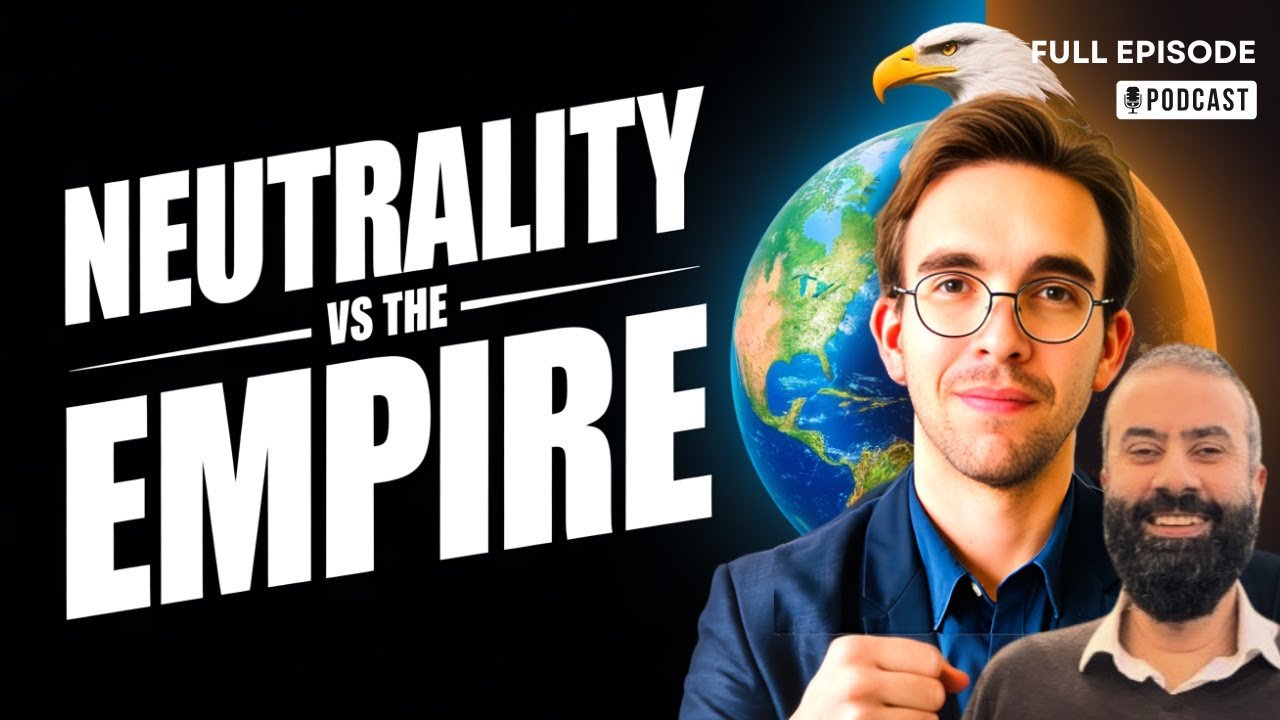
Neutrality Studies, Geopolitics, and Independent Media
Insights from an Interview with Dr. Pascal Lottaz
In an era defined by escalating global conflicts, information warfare, and rigid alliance politics, the concept of neutrality is increasingly misunderstood—or deliberately sidelined. In this in-depth conversation, Dr. Pascal Lottaz, Associate Professor at Kyoto University and founder of the Neutrality Studies platform, explores the meaning of neutrality in international relations, the geopolitical failures surrounding Ukraine, and the growing role of independent media and academic podcasts in challenging dominant narratives
[English (auto-generated)] Epis…
.
This discussion offers essential insights for anyone interested in geopolitics, international law, neutrality policy, and independent geopolitical analysis.
Who Is Dr. Pascal Lottaz?
Dr. Pascal Lottaz is an Associate Professor at Kyoto University and the creator of the Neutrality Studies Podcast, a platform dedicated to examining neutral actors in global politics. Originally from Switzerland, Dr. Lottaz brings a unique perspective shaped by both European diplomatic traditions and East Asian academic environments.
His research focuses on:
-
Neutral and non-aligned states
-
Neutral institutions such as the Red Cross and the Vatican
-
The erosion and failure of neutrality in modern geopolitics
Through academic research and long-form interviews, he investigates why neutrality succeeds in some cases—and catastrophically fails in others
[English (auto-generated)] Epis…
.
What Is Neutrality in International Relations?
Neutrality is often misunderstood as political passivity. In reality, it is a high-engagement foreign policy strategy.
Key Characteristics of Neutrality
-
Refusal to participate in armed conflicts between other states
-
Legal obligations under international law during wartime
-
Active diplomatic engagement with all sides
-
Defense of territorial sovereignty without aggression
Historically, neutrality has taken different forms:
-
Permanent neutrality (e.g., Switzerland, Austria)
-
Occasional neutrality (e.g., United States prior to 1941)
-
Institutional neutrality (e.g., International Committee of the Red Cross)
Neutrality is not outcome-neutral—some actors benefit more than others—but it aims to prevent escalation and preserve autonomy
[English (auto-generated)] Epis…
.
Why Neutrality Is So Difficult to Maintain Today
According to Dr. Lottaz, modern neutrality faces intense pressure due to:
-
Alliance systems like NATO and the EU
-
Hybrid warfare and economic sanctions
-
Covert operations and political subversion
-
Media and narrative control
Powerful states frequently pressure neutral countries to “pick a side,” especially during high-stakes conflicts. Smaller states often lack the military or political leverage required to enforce their neutrality, making them vulnerable to external interference
[English (auto-generated)] Epis…
.
The Case of Ukraine: A Failed Neutrality Strategy
One of the most striking parts of the discussion centers on Ukraine’s lost neutrality.
Ukraine’s Neutral Status Before 2014
-
Ukraine had a neutrality clause in its constitution
-
The country was positioned as a bridge between Russia and Europe
-
Neutrality allowed economic and political balance
How Neutrality Was Undermined
Dr. Lottaz argues that Ukraine’s neutrality was systematically eroded through:
-
Western political pressure
-
NATO expansion dynamics
-
Internal political subversion
-
The 2014 Maidan uprising and regime change
The removal of neutrality eliminated Ukraine’s role as a buffer state, contributing directly to the conditions that led to war
[English (auto-generated)] Epis…
.
Neutrality vs Strategic Ambiguity
Modern policymakers often replace the term “neutrality” with strategic ambiguity, but Dr. Lottaz emphasizes that the two concepts are closely related.
Neutrality historically allowed states to:
-
Trade with multiple blocs
-
Avoid entangling military commitments
-
Act as mediators and diplomatic channels
Today, strategic ambiguity is frequently tolerated—until it threatens the interests of dominant powers, at which point pressure intensifies
[English (auto-generated)] Epis…
.
External and Internal Factors That Decide Neutrality
Not every country can successfully remain neutral.
External Factors
-
Geographic exposure to conflict zones
-
Willingness of major powers to respect neutrality
-
Ability to enforce borders and airspace
Internal Factors
-
Political unity
-
Resistance to foreign subversion
-
Independent media and institutions
Without strong internal governance, neutrality becomes vulnerable to manipulation from abroad
[English (auto-generated)] Epis…
.
Why Independent Media and Podcasts Matter
The conversation also explores the rise of independent geopolitical podcasts and long-form interviews.
Why the Neutrality Studies Podcast Succeeds
-
Academic depth without mainstream constraints
-
Diverse guests from diplomacy, academia, and politics
-
Long-form, unscripted discussions
-
Willingness to challenge dominant narratives
Dr. Lottaz highlights a growing public appetite for serious geopolitical analysis, especially during times of widespread propaganda and simplified media narratives
[English (auto-generated)] Epis…
.
Bridging Academia and the Public
One of the defining strengths of the Neutrality Studies platform is its ability to:
-
Translate academic research into accessible discussions
-
Maintain intellectual rigor without “dumbing down” content
-
Respect the audience’s ability to think critically
This approach demonstrates that high-level geopolitical thinking is not limited to universities—it thrives in public discourse when given space.
Final Thoughts: The Future of Neutrality
Neutrality remains one of the most powerful—but endangered—tools in international relations. As global tensions rise, Dr. Pascal Lottaz’s work highlights a crucial truth:
Neutrality is not weakness. It is a deliberate strategy that requires strength, discipline, and political courage.
Understanding neutrality is essential not only for policymakers, but for citizens seeking clarity in an increasingly polarized world.
SEO Keywords Used
Neutrality studies, geopolitics podcast, international relations neutrality, Ukraine neutrality, geopolitical analysis, independent media geopolitics, Neutrality Studies podcast, Pascal Lottaz, neutrality in international law, non-aligned states