
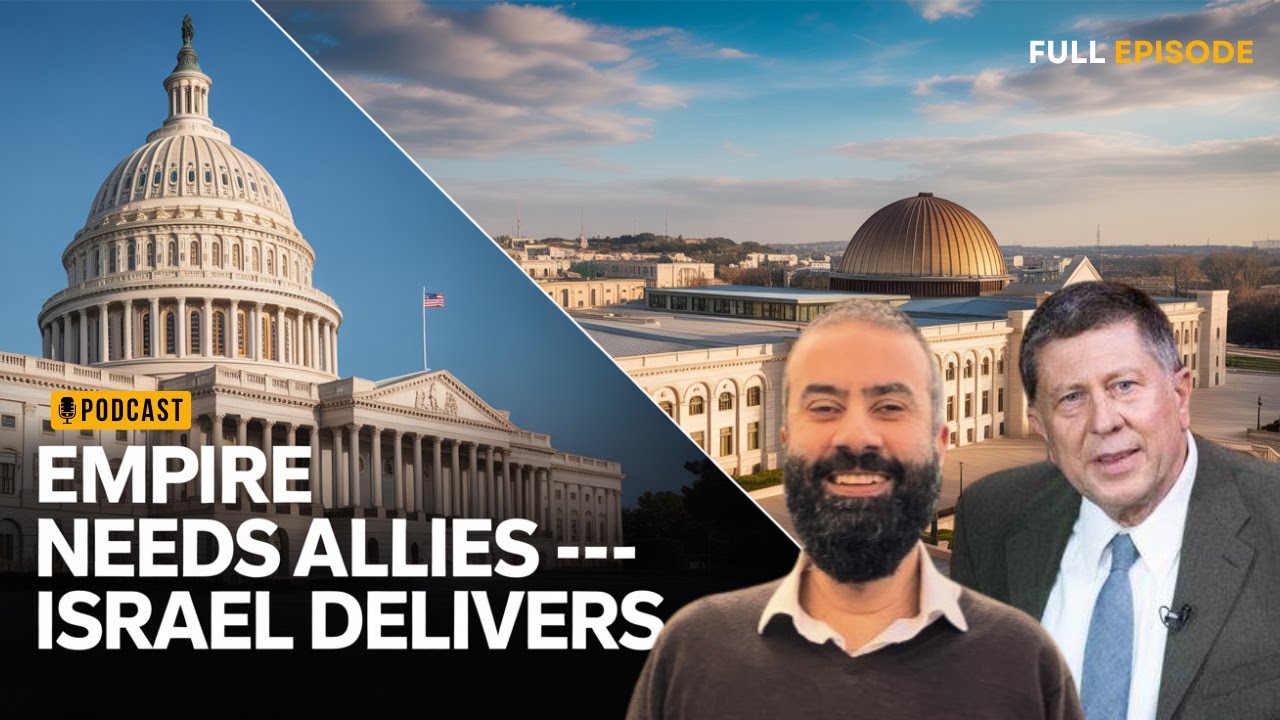
Episode 54 – America, Israel, and Empire: A Conversation with David N. Gibbs
In Episode 54 of Kianistan, we sit down with Professor David Gibbs, historian at the University of Arizona, to examine the historical foundations and geopolitical trajectory of the US–Israel relationship. This wide-ranging conversation explores how Israel evolved from early Soviet backing to becoming America’s closest strategic ally, and what that transformation reveals about global power politics.
As America’s global dominance faces mounting challenges in an emerging multipolar world, we ask a pressing question: Is the US–Israel alliance entering a new phase — or approaching a turning point?
From Soviet Support to Strategic Alliance
In Israel’s early years, the Soviet Union played a significant role in supporting the establishment of the Israeli state. Yet within a short period, Israel became deeply aligned with the United States.
Professor Gibbs explains:
-
Why Israel initially received backing from Moscow
-
How Cold War dynamics shifted Israel firmly into the Western camp
-
The strategic calculations that reshaped Middle East alliances
This transformation was not inevitable — it was driven by geopolitical competition, ideological realignment, and evolving regional conflicts.
The 1967 Six-Day War: A Turning Point
A major inflection point came with the Six-Day War.
The war dramatically altered Middle Eastern geopolitics and strengthened Israel’s image in Washington as a powerful regional military partner. Professor Gibbs discusses how the war:
-
Elevated Israel’s strategic value in U.S. eyes
-
Reshaped American calculations in the Middle East
-
Influenced future military and diplomatic commitments
The aftermath of 1967 helped solidify the modern US–Israel alliance structure.
Vietnam, Nixon, and the Rise of Strategic Allies
The psychological and political aftermath of the Vietnam War had a profound impact on American foreign policy thinking.
Under Richard Nixon, Washington increasingly relied on strong regional allies to maintain influence without committing large numbers of American troops.
Israel emerged as a reliable regional partner during this era. The discussion explores how the trauma of Vietnam reshaped U.S. global strategy and reinforced alliance-based power projection.
The Role of the Israel Lobby in Washington
A key part of the episode examines the influence of pro-Israel advocacy networks in U.S. policymaking.
We analyze:
-
The role of organizations such as AIPAC
-
Campaign financing and congressional alignment
-
The relationship between public opinion and official policy
Can American public sentiment meaningfully influence Middle East policy? Or do institutional and strategic interests ultimately prevail?
Gaza, Global Opinion, and PR Warfare
The conversation also addresses the ongoing war in Gaza Strip and its global repercussions.
Topics include:
-
Media framing and public relations battles
-
The divergence between global public opinion and official Western policy
-
Whether reputational costs affect long-term alliance sustainability
As global narratives shift, the US–Israel relationship faces increasing scrutiny across international forums.
Is the Alliance Sustainable in a Multipolar World?
With the rise of China, renewed Russian assertiveness, and broader Global South alignment, American unipolar dominance is being questioned.
Professor Gibbs explores:
-
Whether the US–Israel alliance remains strategically indispensable
-
How shifting global power structures may alter bilateral dynamics
-
The long-term durability of American hegemony
If the international system becomes more multipolar, will Washington recalibrate its alliances — or double down?
Why This Episode Matters
Understanding the US–Israel relationship is essential for analyzing:
-
Middle East geopolitics
-
American foreign policy strategy
-
Global power transitions
-
Lobbying and democratic accountability
-
The future of U.S. global leadership
Episode 54 provides historical depth and strategic analysis at a moment of global uncertainty.
About Professor David Gibbs
David N. Gibbs is a historian at the University of Arizona specializing in U.S. foreign policy, Cold War history, and interventionism. His scholarship critically examines American global strategy and the structural forces shaping international alliances.
Learn more: https://dgibbs.arizona.edu/
Watch More from Kianistan
Kianistan brings you in-depth discussions on:
-
Geopolitics and empire
-
U.S. foreign policy
-
Islam and global politics
-
Emerging technologies
-
The shifting world order
Subscribe for more serious, research-driven conversations that go beyond headlines.
🌐 Visit: www.kianistan.com
💼 Support our sponsors: www.worldwidelistings.co.uk
🔔 Turn on notifications so you don’t miss upcoming interviews.
SEO Keywords
America Israel alliance history, David Gibbs interview, US Israel relationship origins, Six-Day War impact on US policy, Vietnam War and US foreign policy, Nixon Middle East strategy, Israel lobby influence Washington, Gaza war global opinion, multipolar world order, American empire analysis, US Middle East geopolitics, Kianistan podcast episode 54, US foreign policy and Israel, Cold War Middle East strategy