
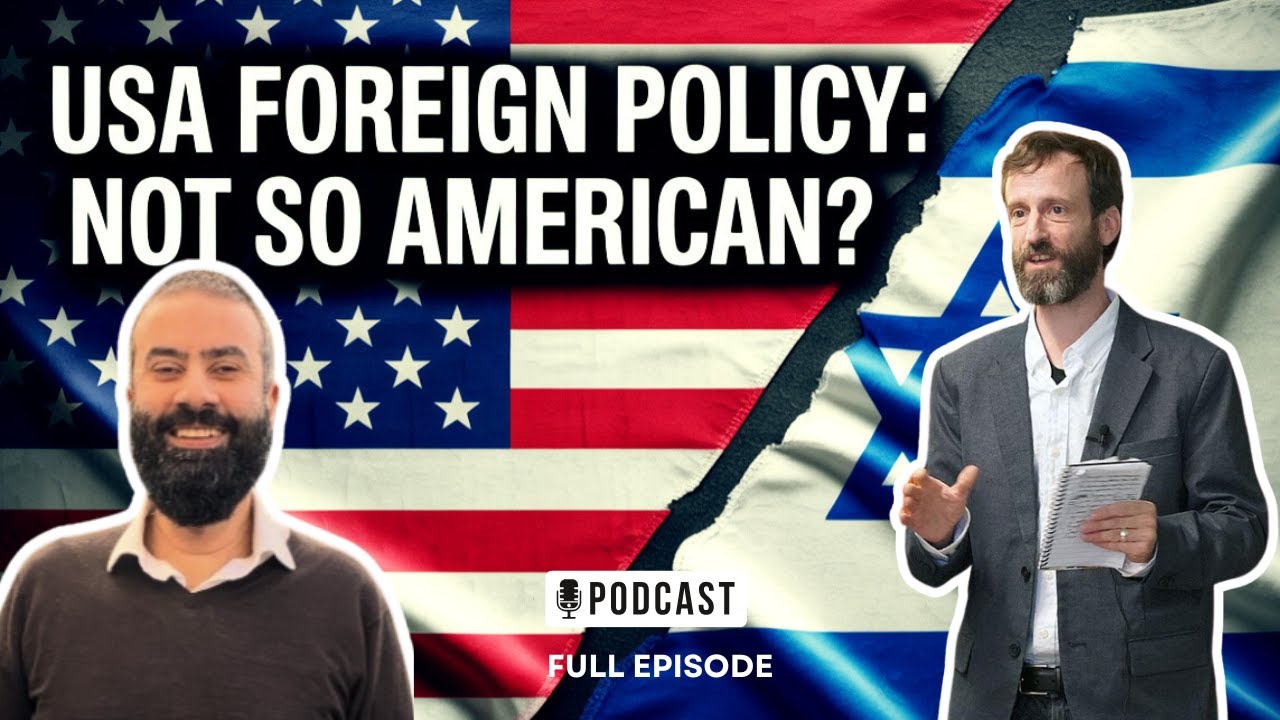
Ep 53 – America First or Israel First? with Scott Horton
Is U.S. foreign policy truly serving American interests — or is it shaped by powerful external alliances and lobbying networks?
In Episode 53 of Kianistan, Scott Horton joins us for a sharp and unfiltered conversation on President Donald Trump’s second term and the meaning of “America First” in practice. We examine whether current U.S. foreign policy reflects national sovereignty — or long-standing strategic commitments abroad.
This episode dives deep into Washington’s decision-making on Iran, Israel, Yemen, and the broader Middle East, asking a central question: Who ultimately benefits from American power projection?
Trump’s Second Term: Continuity or Break from the Establishment?
Donald Trump campaigned on an “America First” platform — promising reduced foreign entanglements and a recalibration of U.S. global commitments. But has that promise translated into policy?
Scott Horton analyzes:
-
Whether Trump’s second-term foreign policy marks a genuine shift
-
The influence of lobbying groups and foreign policy networks in Washington
-
The tension between nationalist rhetoric and strategic alliances
Is the administration redefining U.S. priorities — or reinforcing existing power structures?
The Israel Factor in U.S. Policy
The episode examines the long-standing U.S.–Israel strategic relationship and the role of pro-Israel advocacy groups in shaping American political discourse.
We explore:
-
The depth of U.S. military and diplomatic support for Israel
-
The role of lobbying organizations such as AIPAC
-
Whether American and Israeli strategic interests fully align
The conversation critically evaluates how domestic politics, donor networks, and strategic alliances intersect in Washington policymaking.
Iran Nuclear Talks: Diplomacy or Escalation?
A key focus of the episode is U.S. policy toward Iran.
Scott Horton discusses:
-
The legacy of Trump’s withdrawal from the Joint Comprehensive Plan of Action
-
The future of nuclear negotiations
-
Whether confrontation or diplomacy better serves U.S. national interests
Is Washington moving toward renewed engagement — or deeper confrontation?
Yemen, Regional Power Politics, and U.S. Strategy
The conversation also addresses the war in Yemen and the fragile truce efforts involving regional actors.
We examine:
-
U.S. involvement in Middle Eastern conflicts
-
Saudi and Iranian regional competition
-
Whether America is de-escalating or repositioning its military footprint
Does “America First” mean retrenchment — or strategic realignment?
Who Shapes American Foreign Policy?
At the heart of this episode lies a broader structural question:
-
Is U.S. foreign policy driven by voter interests?
-
Strategic institutions?
-
Defense contractors?
-
Ideological networks?
-
Foreign policy lobbying organizations?
Scott Horton offers a libertarian critique of interventionism, arguing that American global strategy often serves elite interests rather than ordinary citizens.
Why This Conversation Matters
U.S. foreign policy decisions affect:
-
Global energy markets
-
Middle Eastern stability
-
U.S.–China and U.S.–Russia dynamics
-
Military spending and national debt
-
Civil liberties at home
Understanding who influences policy — and why — is critical to evaluating the future of American power.
About Scott Horton
Scott Horton is a prominent libertarian foreign policy commentator and host of The Scott Horton Show. He is also affiliated with the Libertarian Institute and is widely known for his critiques of U.S. interventionism and war policy.
Watch More from Kianistan
Kianistan brings you in-depth discussions on:
-
Geopolitics and global power
-
U.S. foreign policy
-
Islam and the modern world
-
Emerging technologies
-
International diplomacy
👁️🗨️ Watch now for a no-holds-barred look at power, policy, and influence in Washington.
🌐 Visit: www.kianistan.com
💼 Support our sponsors: www.worldwidelistings.co.uk
🔔 Subscribe and turn on notifications so you don’t miss upcoming interviews.
SEO Keywords
America First foreign policy, Trump second term foreign policy, Scott Horton interview, U.S. Israel relations, AIPAC influence, Iran nuclear deal analysis, JCPOA withdrawal, Yemen war US role, libertarian foreign policy critique, Zionist lobby debate, Washington power politics, Kianistan podcast episode 53, U.S. Middle East strategy, Trump Iran policy, geopolitics analysis