
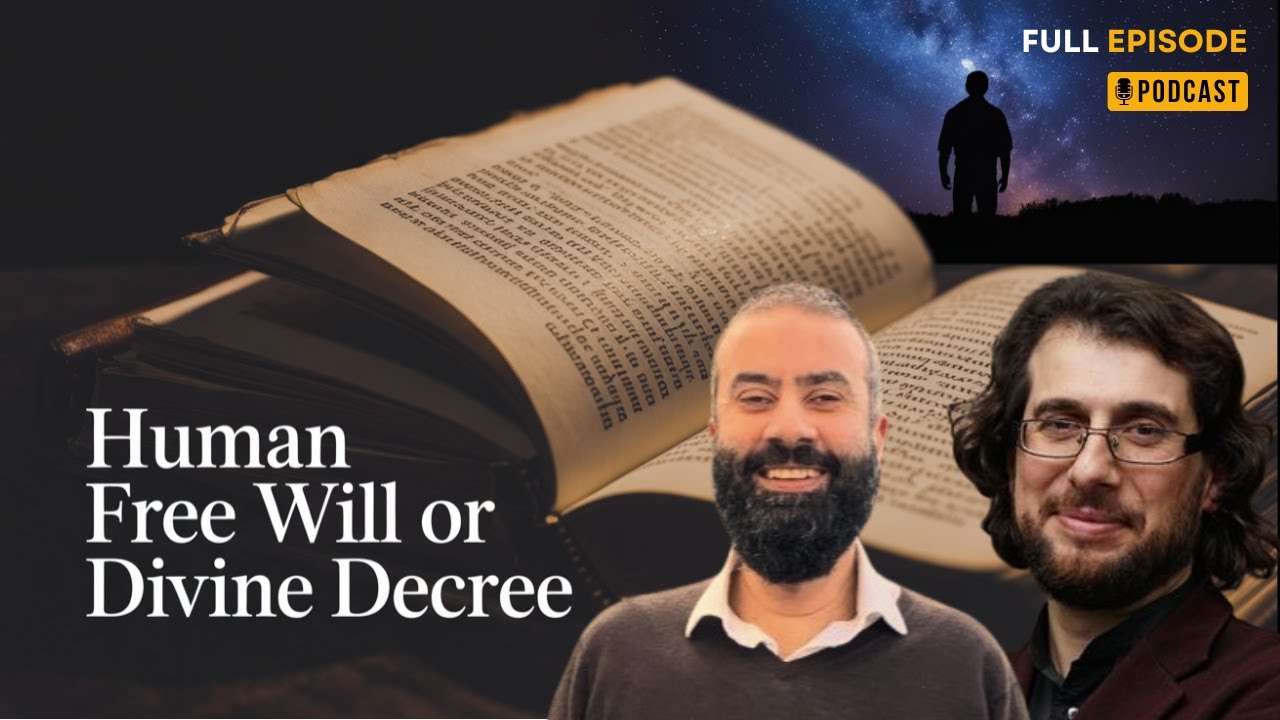
Ep 52 – On Islamic Metaphysics, Human Freedom, and Divine Causality with Özgür Koca
Is our destiny written, or do we write it ourselves?
In Episode 52 of Kianistan, we sit down with Dr Özgür Koca for a deep and accessible conversation on one of the most profound debates in Islamic intellectual history: the relationship between human free will and divine decree (qadar). This episode explores Islamic metaphysics, theology, philosophy, and even neuroscience—bridging classical debates with modern questions about human agency and responsibility.
If you have ever wondered whether humans truly choose their actions or whether everything unfolds according to divine will, this discussion offers clarity, nuance, and depth.
The Core Question: Free Will or Predestination in Islam?
The debate over free will vs. predestination has shaped Islamic theology for over a thousand years. At its heart lies a fundamental tension:
-
If God is all-powerful and all-knowing, are human beings truly free?
-
If everything is decreed by God, how can humans be held morally responsible?
Dr Koca explains how early Muslim theologians wrestled with these questions, forming schools of thought that still influence contemporary Islamic belief.
The Mu‘tazilite Perspective: Divine Justice and Human Responsibility
One of the earliest theological schools in Islam, the Mu’tazila, emphasized God’s justice (‘adl).
Their core argument was simple yet powerful:
-
God is perfectly just.
-
Therefore, humans must have genuine free will.
-
Otherwise, divine judgment would be unfair.
According to this view, humans create their own actions and are therefore morally accountable. Without true freedom, reward and punishment would lose meaning.
This perspective strongly prioritizes human responsibility in a morally structured universe.
The Ash‘arite View: Divine Omnipotence and Absolute Will
In response, the Ash’arism school defended God’s absolute power and sovereignty.
Their argument:
-
Nothing can occur outside God’s will.
-
All actions are created by God.
-
Humans “acquire” (kasb) actions, but ultimate causality belongs to God.
This framework safeguards divine omnipotence but raises difficult philosophical questions: If God creates all actions, what does human freedom really mean?
Dr Koca carefully explains how this position attempts to balance divine causality with moral accountability.
A Mystical Lens: Ibn Arabi and the Unity of Being
The conversation then moves into Sufi metaphysics through the thought of Ibn Arabi.
Ibn Arabi approaches the problem differently. Rather than framing the debate as a zero-sum conflict between divine will and human freedom, he reorients the discussion around being itself.
From this perspective:
-
All existence is rooted in divine reality.
-
Human action is not independent of God, yet not meaningless.
-
Freedom is understood through consciousness of one’s relationship to the Divine.
This metaphysical framework transcends strict legal or theological categories and offers a spiritually integrated understanding of causality.
Can Humans Be Judged Fairly If Everything Is Predestined?
One of the central ethical questions explored in this episode is whether divine decree undermines justice.
Dr Koca explains that Islamic theologians did not treat this as a simple binary. Instead, they developed sophisticated models of causation that allowed for:
-
Divine foreknowledge without coercion
-
Moral responsibility without limiting God
-
Accountability within a divinely sustained universe
The discussion shows that Islamic thought contains multiple frameworks—not a single rigid answer.
Does Human Freedom Limit God?
Another key philosophical issue is whether affirming human free will restricts divine omnipotence.
If humans truly create actions independently, does that compromise God’s sovereignty?
If God determines everything, does that eliminate meaningful choice?
This episode demonstrates how Islamic metaphysics developed highly nuanced theories to avoid both extremes.
How Do Christianity and Judaism Approach Free Will?
The conversation broadens to explore how other Abrahamic traditions handle similar questions.
In Christianity, thinkers like Augustine of Hippo wrestled with grace and free will. Later debates within Protestant theology intensified questions about predestination.
In Judaism, discussions within rabbinic literature also explore divine foreknowledge and human responsibility, maintaining a balance between covenantal duty and divine sovereignty.
By comparing traditions, the episode highlights that the tension between freedom and divine will is universal—not uniquely Islamic.
What Does Neuroscience Say About Free Will?
Modern neuroscience introduces another dimension to this debate.
Studies examining brain activity before conscious decisions raise questions about whether humans truly “choose” freely—or whether decisions are biologically determined before we become aware of them.
Dr Koca engages this modern scientific challenge while showing how classical Islamic metaphysics may still offer meaningful philosophical resources.
Rather than dismissing science, the conversation integrates it into a broader metaphysical inquiry.
Why This Debate Still Matters Today
The question of free will is not merely abstract theology. It affects:
-
Moral responsibility
-
Criminal justice
-
Political accountability
-
Spiritual development
-
Concepts of sin and repentance
-
Human dignity
Understanding Islamic views on divine causality and human agency helps modern Muslims—and anyone interested in philosophy—navigate ethical life in a complex world.
Key Themes Covered in Episode 52
-
Islamic metaphysics and ontology
-
Free will (ikhtiyar) and divine decree (qadar)
-
Mu‘tazilite vs Ash‘arite theology
-
Sufi metaphysics and Ibn Arabi
-
Divine justice and moral responsibility
-
Comparative theology (Islam, Christianity, Judaism)
-
Neuroscience and determinism
-
Philosophy of causality
About Dr Özgür Koca
Dr Özgür Koca is a scholar of Islamic theology and philosophy whose work engages both classical Islamic thought and contemporary philosophical debates. His research bridges metaphysics, ethics, and comparative theology, making complex ideas accessible without sacrificing depth.
Watch More from Kianistan
Kianistan brings you in-depth conversations on:
-
Islamic thought and philosophy
-
Geopolitics and global affairs
-
Religion and modernity
-
Emerging technologies
-
Intellectual history
If you value serious, thoughtful discussion beyond headlines and soundbites, subscribe and turn on notifications so you don’t miss future episodes.
🌐 Visit: www.kianistan.com
💼 Support our sponsors: www.worldwidelistings.co.uk
SEO Keywords
Islamic metaphysics, free will in Islam, divine decree in Islam, qadar and free will, Mu‘tazilites and Ash‘arites, Ibn Arabi metaphysics, Islamic theology podcast, human freedom and divine causality, Islamic philosophy discussion, neuroscience and free will, Kianistan podcast, Dr Özgür Koca interview, Sufi metaphysics, determinism in religion, Islamic intellectual history