
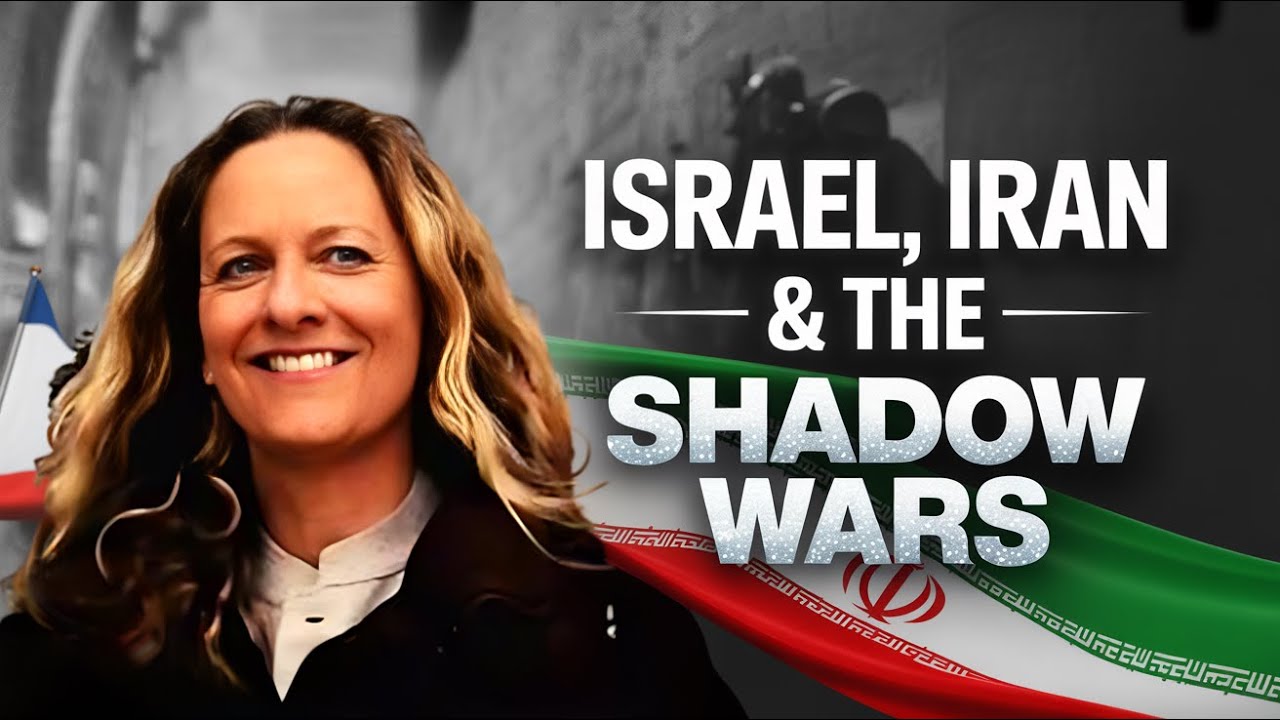
Vanessa Beeley: How the US Lost the Plot in Syria and Iran
What really happened in Syria after the fall of Damascus, and why does Vanessa Beeley believe the same regime-change playbook has now failed against Iran?
In this episode of the Kianistan Podcast, host Tafhim Kiani speaks with Vanessa Beeley, British journalist, photographer, and activist who lived in Damascus for five years until the government’s collapse in December 2024.
Drawing on firsthand reporting from Syria’s front lines since 2014 and her family’s own diplomatic history in the region, Beeley offers a sharply critical account of the new authorities in Damascus, Israel’s regional strategy, and why she believes Iran emerged from its recent war with Israel stronger, not weaker.
The conversation covers the ethnic cleansing campaigns underway in Syria, Hezbollah’s real post-ceasefire position, and the differing roles played by Russia and China in backing Iran.
Key Topics Discussed
Syria After Assad: Ethnic Cleansing Under the New Regime
Beeley describes what she witnessed in the aftermath of the Syrian government’s sudden collapse.
The discussion explores:
- Her firsthand account of leaving Damascus the morning after it fell
- Reports of ethnic cleansing campaigns targeting Christians, Alawites, Druze, and non-compliant Sunnis
- The role of foreign takfiri mercenaries, estimated at 30 to 40 percent of the new regime’s forces
Al-Julani’s Fragile Grip on Power
The conversation turns to the man now nominally ruling Syria and the pressures surrounding him.
- His earlier struggles to hold power in Idlib, even with US support against rivals
- Reports that Western intelligence services helped rebrand his public image
- The competing regional powers — Turkey, the Gulf states, Israel, Russia, the West — all pulling him in different directions
Israel’s Strategy of Courting Minorities Across the Region
Beeley outlines how Israel has approached Syria’s fractured ethnic landscape.
- How Syrian Kurds were viewed as enabling an Israeli-aligned corridor across the northeast
- Divisions within Druze communities over alignment with Israel
- Why this strategy mirrors approaches used elsewhere in the region
Hezbollah and Lebanon After the Ceasefire
The discussion addresses claims that Hezbollah has been permanently weakened.
- Why Beeley disputes narratives describing Hezbollah as degraded or defeated
- Israeli pressure on Lebanon to disarm the group and withhold reconstruction funding
- Hezbollah’s anticipated pivot back toward Lebanon following the Iran ceasefire
How Iran Withstood the 12-Day War
Beeley argues the war’s outcome was closer to a self-inflicted wound for Israel and the US.
- Millions of Iranians attending funerals for assassinated commanders as a show of unity
- Why Iran deliberately limited civilian casualties in Israel compared to what it was capable of
- Reports of significant, underreported damage to Israeli military and intelligence infrastructure
Russia’s Limits and China’s Quiet Reliability
The episode examines how Iran’s two major partners responded very differently to the crisis.
- Why Russia avoided any position that could bring it into conflict with Israel
- The absence of a mutual defense pact between Russia and Iran, unlike Russia’s pact with North Korea
- Why China’s rare earth export restrictions and quiet support are proving more consequential
- Parallels Beeley draws to China’s backing of Pakistan during its own conflict with India
What Comes Next: The Risk of a Second Attack
The conversation closes on the dangers still facing the region.
- Concerns that Israel may resort to covert tactics like targeted assassinations or sabotage
- The likelihood that Israel now shifts focus toward weakening resistance factions in Lebanon and Iraq
- Beeley’s warning about the possibility of a false flag operation to build public support for renewed conflict
Major Takeaways
- Syria’s new authorities are overseeing ethnic cleansing campaigns against multiple minority communities.
- Al-Julani’s rule remains fragile, dependent on foreign mercenary factions and competing regional patrons.
- Israel has pursued a strategy of courting minority groups across Syria and the wider region.
- Beeley disputes claims that Hezbollah has been meaningfully degraded despite heavy losses.
- Iran’s restraint in targeting civilians in Israel contrasted sharply with the damage inflicted on its own population.
- China’s quieter, more consistent support is proving more strategically significant to Iran than Russia’s caution.
About Vanessa Beeley
Vanessa Beeley is a British journalist, photographer, and activist based in the Middle East. The daughter of a British diplomat with deep ties to the region, she began covering Syria’s conflict from 2014 and lived in Damascus from 2019 until the government’s collapse in December 2024.
Her work focuses on:
- Syrian Politics and Conflict Reporting
- Middle East Journalism
- Regional Resistance Movements
- Photography and On-the-Ground Documentation
About Kianistan Podcast
Hosted by Tafhim Kiani, the Kianistan Podcast features conversations with leading journalists, academics, and analysts on the conflicts reshaping the Middle East and the wider world. This episode brings a rare firsthand perspective from inside post-collapse Syria.
Topics regularly include:
- Syria
- Iran
- Israel
- Lebanon
- Middle East
- International Relations
- World Politics
Frequently Asked Questions
Who is Vanessa Beeley?
Vanessa Beeley is a British journalist, photographer, and activist who lived in Damascus from 2019 to 2024 and has covered the Syrian conflict since 2014.
What is happening in Syria under the new government?
According to Beeley, the new authorities led by al-Julani are overseeing ethnic cleansing campaigns against Christian, Alawite, Druze, and non-compliant Sunni communities, relying heavily on foreign mercenary factions.
Has Hezbollah really been weakened after the recent conflicts?
Beeley argues that while Hezbollah suffered significant leadership losses, characterizations of it as degraded or defeated are inaccurate, and it retains substantial capability.
How did Iran withstand the 12-day war with Israel?
Beeley points to Iran’s institutional resilience, public displays of unity around assassinated commanders, and its ability to inflict significant damage on Israeli infrastructure despite Israel’s technological advantages.
Conclusion
Vanessa Beeley’s firsthand account paints a troubling picture of a region still being reshaped by outside intervention — from Syria’s fractured new order to Iran’s hardened resolve after facing Israel directly.
From ethnic cleansing in Syria to the quiet but consequential role played by China, this conversation offers a ground-level perspective often missing from mainstream coverage of the region.
Whether you’re interested in Syrian politics, the Israel-Iran conflict, or the broader contest for influence in the Middle East, this episode is essential listening.
SEO Keywords
- Vanessa Beeley
- Syria
- Al-Julani
- Iran Israel War
- Hezbollah
- Middle East
- Damascus
- Ethnic Cleansing Syria