
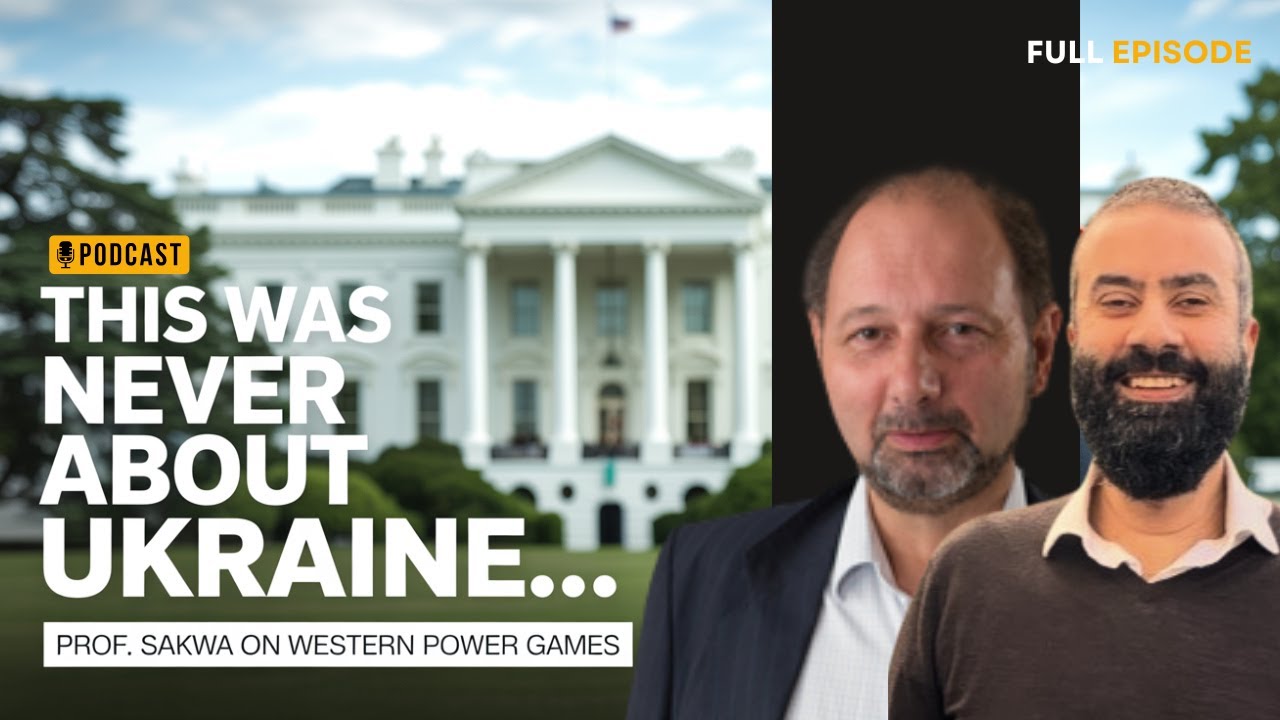
Humiliating Russia Won’t End Well: Richard Sakwa Warns Europe About Ukraine, NATO & the Future of Peace
Why is Europe doubling down on the Ukraine war? Political scientist Richard Sakwa warns that humiliating Russia could have devastating consequences for Europe, NATO, and global peace.
Humiliating Russia Won’t End Well: Richard Sakwa’s Warning to Europe
As the Russia–Ukraine war continues with no clear end in sight, Europe faces a critical question: Is pursuing Russia’s defeat a path to peace—or a recipe for deeper instability?
In Episode 57, renowned political scientist and Russian affairs expert Richard Sakwa joins the discussion to examine the Ukraine war, NATO expansion, Europe’s military strategy, and the future of diplomacy between Russia and the West.
The episode explores one central idea: humiliating Russia will not create long-term peace—and may instead deepen geopolitical divisions for generations.
Who Is Richard Sakwa?
Richard Sakwa is one of the leading scholars on Russian and Eastern European politics. A professor and author of multiple books on Russia, Ukraine, and post-Cold War geopolitics, Sakwa has long argued that diplomacy and security guarantees—not escalation—are the key to stability in Europe.
In this episode, he shares his perspective on why Europe’s current approach may be worsening the crisis rather than resolving it.
Is Europe Repeating Cold War Mistakes?
One of the strongest themes of the conversation is the idea that Europe may be repeating strategic mistakes made after the end of the Cold War.
According to Sakwa, opportunities existed in the 1990s and early 2000s to create a more inclusive European security structure—one that included Russia rather than isolating it.
Instead, tensions increased through expanding military blocs, growing mistrust, and competing security interests.
The discussion asks difficult but important questions:
- Did Europe miss opportunities for diplomacy?
- Could the Ukraine war have been prevented?
- Has NATO expansion increased or reduced security?
- What role should diplomacy play today?
Rather than focusing only on battlefield developments, the episode explores the broader geopolitical decisions that shaped the current crisis.
Why “Humiliating Russia” Could Backfire
A major argument discussed in this episode is that attempting to politically, economically, or militarily humiliate Russia may create long-term instability instead of peace.
Historically, major powers that feel strategically cornered rarely accept defeat quietly. Instead, unresolved grievances often create new conflicts.
The episode explores how:
- Escalation can reduce diplomatic options
- Military pressure without negotiation may prolong conflict
- Long-term European security requires dialogue, not only deterrence
- Sustainable peace must involve realistic political agreements
This perspective challenges mainstream narratives and raises important questions about how wars end—and what happens afterward.
Europe’s Security Crisis: Is Militarization the Answer?
The discussion also examines Europe’s growing military spending and changing defense priorities.
With uncertainty surrounding U.S. foreign policy and NATO commitments, many European governments are increasing defense budgets and expanding military capabilities.
But Sakwa questions whether Europe is moving toward a “warfare model” instead of a peace model.
Key issues explored include:
NATO’s Future
As geopolitical tensions rise, Europe faces uncertainty about the future of NATO and its dependence on American leadership.
Strategic Autonomy
Can Europe build an independent foreign policy, or will it continue relying heavily on Washington for security decisions?
Economic Consequences
Higher military spending comes at a time when many European nations face economic stagnation, inflation, energy insecurity, and social challenges.
The episode argues that Europe may eventually need to balance military preparedness with renewed diplomatic engagement.
Donald Trump, NATO, and the Future of U.S.–Europe Relations
Another important topic discussed is the return of Donald Trump and what his presidency means for Europe.
The episode explores concerns about shifting American priorities and whether the United States is gradually moving away from traditional transatlantic commitments.
Questions discussed include:
- Will America reduce its involvement in European security?
- Can Europe defend itself independently?
- Is U.S. foreign policy becoming more transactional?
- What happens if Washington reduces military support for Ukraine?
These developments could significantly reshape Europe’s geopolitical future.
Ukraine’s Future: Peace Deal or Endless War?
One of the most emotional parts of the discussion centers around Ukraine itself.
The episode reflects on whether Ukraine could have maintained a more neutral geopolitical position and avoided becoming trapped between competing global powers.
Key topics include:
- Peace negotiations and ceasefire challenges
- The role of diplomacy in ending the war
- Security guarantees for Ukraine
- Long-term rebuilding and regional stability
The discussion also examines how battlefield realities, international aid, and political decisions could shape the next phase of the conflict.
Europe, Russia & Energy: Can Relations Recover?
The conversation also highlights Europe’s energy crisis and the long-term impact of damaged Russia-Europe relations.
Before the war, several European economies depended heavily on Russian energy supplies. Since then, energy systems, trade routes, and geopolitical partnerships have shifted dramatically.
An important question raised is:
Can Europe and Russia eventually rebuild economic relations—or has the divide become permanent?
While immediate normalization appears unlikely, the discussion suggests long-term geopolitical realities may eventually force renewed cooperation.
The Rise of a Multipolar World
Another key theme in Episode 57 is the shift away from a Western-dominated global system toward a multipolar world order.
Countries across Asia, Africa, and the Global South are increasingly pursuing independent political and economic partnerships.
The episode explores:
- Russia–China cooperation
- Changing global alliances
- The future of international diplomacy
- Declining Western dominance in global politics
This changing world order could redefine how future conflicts are managed and resolved.
Why This Episode Matters
Episode 57 offers a deep geopolitical discussion that goes beyond headlines and political talking points.
Rather than focusing solely on military developments, it asks broader questions about diplomacy, European leadership, NATO, and the future of peace.
Whether you agree or disagree with the perspectives discussed, the episode provides an opportunity to understand one of the most consequential geopolitical debates of our time.
If you’re interested in geopolitics, international relations, Russia–Ukraine analysis, NATO, or the future of Europe, this episode is essential listening.
Watch / Listen to Episode 57
Tune into Episode 57 to hear Richard Sakwa discuss the Ukraine war, NATO, diplomacy, Europe’s future, and why humiliating Russia may not lead to lasting peace.
SEO Keywords Used: Russia Ukraine war analysis, Richard Sakwa Ukraine, humiliating Russia won’t end well, NATO expansion debate, Europe Russia relations, Ukraine peace talks, Europe security crisis, Donald Trump NATO, future of Europe, Russia Ukraine diplomacy.