
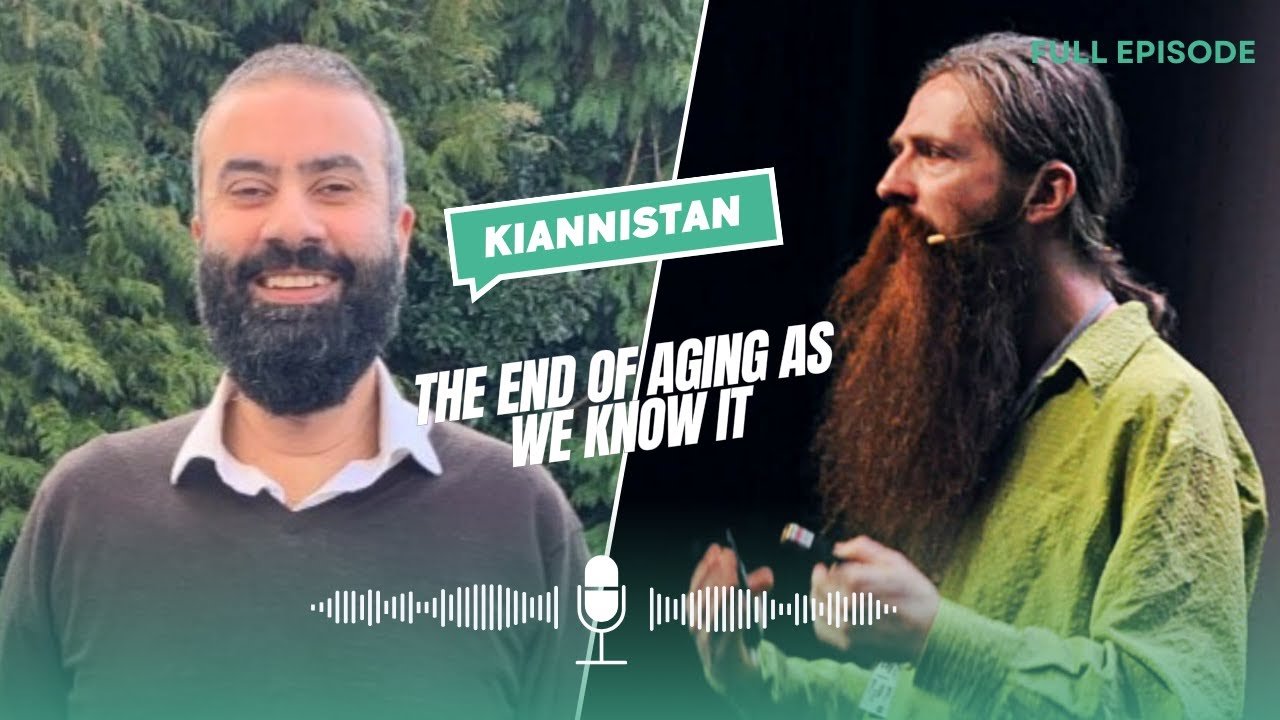
Can We Live Forever? Exploring the Science of Longevity with Dr. Aubrey de Grey
Introduction
In this episode of kianistan, I had the pleasure of speaking with Dr. Aubrey de Grey, a pioneering biomedical gerontologist and co-founder of the SENS Research Foundation. Dr. de Grey is one of the world’s most prominent voices in the science of aging and longevity. We explore the science, ethics, potential societal consequences, and the very real possibility that someone alive today could live to be 1,000 years old.
Watch the Full Episode
Watch on YouTube: Episode 24 – Can We Live Forever? Aubrey de Grey Explains
Aging: A Problem to Solve
Dr. de Grey makes it clear: he is not in favor of aging. Rather, he sees it as a complex, repairable engineering problem. Aging, in his view, is the gradual accumulation of cellular and molecular damage caused by our normal metabolism. Like rust on a car, this damage can be managed and potentially reversed through preventative maintenance.
What is Longevity Escape Velocity?
A central concept in Dr. de Grey’s approach is “longevity escape velocity”—a point at which medical interventions can extend life faster than aging progresses. This doesn’t mean a single cure for aging, but a series of incremental improvements that keep people biologically younger over time. He believes we have a 50/50 chance of reaching this point in the next 12–15 years.
Scientific Approach: Divide and Conquer
Dr. de Grey’s strategy is damage repair: a divide-and-conquer model addressing various types of aging-related cellular damage. This includes gene therapy, stem cell treatments, and regenerative medicine. His current work, including high-cost mouse experiments, seeks to combine interventions and test their synergy.
Religion and Mortality
For religious audiences, Dr. de Grey emphasizes that his work only targets age-related death—not death itself. It is not a defiance of God but rather an effort to reduce suffering. As he puts it, “God can still strike you down with a thunderbolt.”
Overpopulation and Ethical Concerns
Concerns like overpopulation and access are common but, according to Dr. de Grey, misguided. Fertility rates are already declining globally, and future technologies such as AI and virtual living will help distribute populations more effectively. Moreover, he argues that economic incentives—not just ethics—will drive governments to make anti-aging therapies widely available.
Economics and Accessibility
Addressing concerns of elitism, Dr. de Grey asserts that these treatments will be affordable and widespread, because that’s how technology scales. Just as smartphones are now nearly universal, life-extending therapies will follow suit—especially when governments realize that preventing disease is far cheaper than treating it.
Scientific Progress and COVID Comparison
One reason for optimism: the speed at which COVID-19 vaccines were developed. Dr. de Grey argues that regulatory red tape, not science, slows medical innovation. He believes that with the right prioritization and investment, breakthroughs in longevity could arrive much faster.
The Role of Philanthropy and Investment
Funding remains a major bottleneck. While some groups like the Saudi-backed Evolution Foundation are investing heavily, much of the funding is still funneled toward safe, mainstream projects. Dr. de Grey advocates for more bold, unorthodox approaches—and welcomes donations of any size.
Living Longer, Living Better
Extending life is not just about quantity—it’s about quality. Dr. de Grey envisions a future where people live longer, healthier, more productive lives. This opens new possibilities for education, careers, family, and personal growth across centuries.
Final Thoughts
Aging, long considered inevitable, may soon be optional. Thanks to researchers like Dr. Aubrey de Grey, the once far-fetched dream of radical life extension is entering the scientific mainstream. Whether you’re skeptical or hopeful, this is one conversation you don’t want to miss.
Tags: #Longevity #AgingScience #AubreydeGrey #SENS #LifeExtension #AntiAging #KistanPodcast #BiomedicalInnovation #Transhumanism #Healthspan #FutureOfHealth